
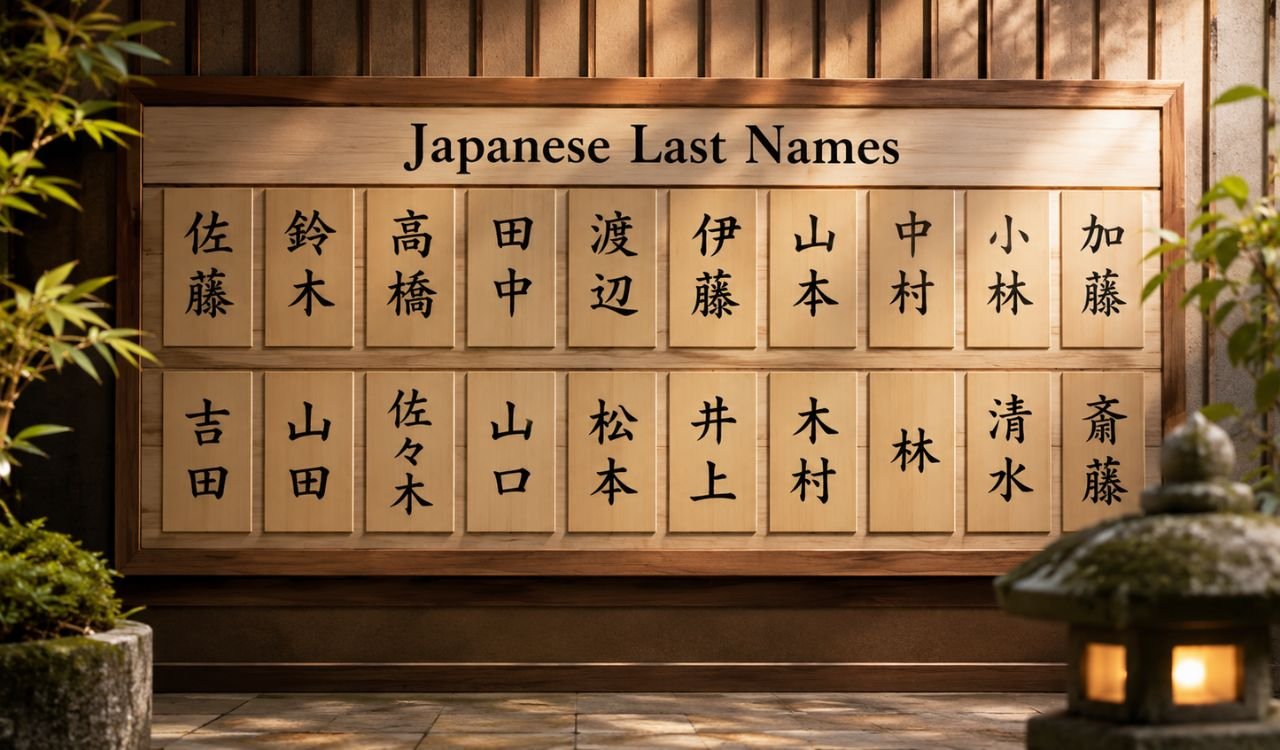
Japanese Last Names are known around the world because they often have a deeper meaning that is intimately related to nature, history, family tradition, and regional culture. Japan has a lot to do with surnames and personal valor. A lot of them are related to mountains, rivers, forests, villages, or jobs from long ago.
There are currently over 100,000 surnames being used in Japan. Some are pretty plentiful, whereas others are scarce and one of a kind. Japanese surnames typically use kanji, and each one has a meaning. This is also the reason why Japanese last names are gorgeous and meaningful at the same time.
Here is a list of some common Japanese surnames and their etymology, as well as the most popular family names in Japan and rare surnames along with facts about Japanese naming traditions.
History of Japanese Last Names
Japanese Last Names started to be used widely in the late 19th century. Family names were mostly limited to nobility, noble families, and very influential clans before that time. Most people knew each other by first names or local nicknames.
In the 19th century, at the time of the Meiji Restoration, Japanese law mandated that all citizens adopt a surname. This law served as the foundation of formal records and identification systems. Countless families chose surnames based on landscapes, agricultural areas nearby, rivers, forests, or even villages.
That is why many Japanese surnames still reflect nature today.
For example:
- Yamamoto means “base of the mountain”
- Kawaguchi means “river mouth”
- Tanaka means “middle of the rice field”
These names also illustrate the close relation of the natural world to Japanese culture.
Why Japanese Last Names Are Unique
Unlike many Western surnames, which describe the person’s line of work, Japanese surnames are place-derived and elemental.
Some surnames represent:
- Mountains
- Rivers
- Trees
- Villages
- Rice fields
- Directions
- Weather conditions
Japanese Last Names also have different meanings and pronunciations based on the kanji. This lends many names a certain poetic and cultural beauty.
For instance, the last name “Suzuki” is written with kanji associated with “bell tree” or “wooden bell.”
Most Common Japanese Last Names
The following table illustrates some common Japanese surnames and their meanings.
| Japanese Last Name | Meaning | Popularity |
|---|---|---|
| Sato | Helpful wisteria | Very Common |
| Suzuki | Bell tree | Very Common |
| Takahashi | Tall bridge | Very Common |
| Tanaka | Middle rice field | Very Common |
| Watanabe | Crossing side | Very Common |
| Ito | Thread or wisteria | Common |
| Yamamoto | Base of mountain | Common |
| Nakamura | Middle village | Common |
| Kobayashi | Small forest | Common |
| Kato | Increasing wisteria | Common |
These surnames are found across Japan and are used by millions of people.
Meaning Behind Popular Japanese Family Names
Sato
The Sato is one of the common family names in Japan. The kanji “Sa” is frequently related to wisteria, and “To” can mean aiding or helping. Etymologically, it had been associated with noble families.
Suzuki
Suzuki is another highly popular Japanese Last Names. It has ancient roots and is especially common in western Japan. The surname is connected with farming tools and natural imagery.
Takahashi
Takahashi means “high bridge” or “tall bridge.” Families living near bridges or elevated areas often adopted this surname centuries ago.
Tanaka
Tanaka literally means “middle of the rice field.” This surname reflects Japan’s long agricultural history and the importance of rice farming.
Yamamoto
Yamamoto means “base of the mountain.” It is a nature-inspired surname that represents families living near mountain regions.
Read More: 250+ Dessert Pun Ideas / Funny Mexican Names / Bedroom Spider Bites
Nature and Geography in Japanese Last Names
They bear a huge nature element to them due to the naming traditions of Japan. Most of the surnames depict the physical landscape.
Here are some common words used in surnames:
| Word | Meaning |
|---|---|
| Yama | Mountain |
| Kawa / Gawa | River |
| Ta | Rice field |
| Mura | Village |
| Mori | Forest |
| Hashi | Bridge |
| Saki | Cape or edge |
| Naka | Middle |
| Oka | Hill |
| Shima | Island |
Thousands of unique family names are generated using these elements.
Examples include:
- Moriyama — forest mountain
- Kawashima — river island
- Nakamura — middle village
- Okamoto — base of the hill
This connection with nature makes Japanese surnames meaningful and memorable.
Rare Japanese Last Names
Japan has quite a common family name but also very rare ones. In the case of some rare surnames, there are only a few families living in the region where the place has the surname.
Uncommon Japanese Last Names:
| Rare Surname | Meaning |
|---|---|
| Jyuni | Twelve |
| Mikan | Orange |
| Iekami | Upper house |
| Senju | Thousand hands |
| Shikichi | Four lucks |
Rare surnames usually have some amount of enchantment to them because they are unusual sounding and often associated with a special local story.
Japanese Clan Names and Ancient Families
Japan itself had powerful groups called “uji” long before the modern surname arose. Such clans possessed land, political power, and military force.
Famous historical clan names include:
- Fujiwara
- Minamoto
- Taira
- Tokugawa
These family names are closely tied to Japanese history and samurai culture.
Take the Tokugawa clan that ruled Japan over 250 years during the Edo age.
Still many contemporary surnames have connections to these ancient clans and provincial heads.
How Japanese Names Are Written
The family name in Japan is written before the first name.
For example:
- Sato Haruki
- Suzuki Aiko
- Tanaka Ken
This structure, in the case of English-speaking countries, is sometimes reversed to better help with understanding.
Japanese last names are often written in kanji, but there are other situations where they are written in hiragana or katakana.
Japanese Last Names in Modern Culture
Thanks to anime, movies, sports, technology, and entertainment, you will find out that Japanese surnames are now recognized all around the world.
Well-known characters and celebrities bring Japanese family names to global audiences.
For example:
- Naruto Uzumaki
- Ichigo Kurosaki
- Hayao Miyazaki
- Naomi Osaka
Numerous Japanese family names have undergone insistent revival among foreign fans of anime and manga.
Regional Differences in Japanese Surnames
Some last names are more frequent in some areas of Japan.
For example:
- Hokkaido may have names connected with northern landscapes
- Okinawa has unique Ryukyuan surnames
- Kyoto has many such ancient aristocratic family names.
Regional history has been a factor in the evolution of surnames.
Families typically chose names based on local geography or traditions.
Most Beautiful Japanese Last Names
Japanese surnames fascinate many because of their melodic and poetic sound.
Now here are some beautiful Japanese family names and meanings:
| Last Name | Meaning |
|---|---|
| Aoki | Blue tree |
| Fujimoto | Base of wisteria |
| Komori | Small forest |
| Tachibana | Wild orange flower |
| Mizuno | Water field |
The popularity of these surnames is due to the good phonetic sound and meaning.
Japanese Last Names and Kanji
Kanji points to different meanings; after all, it is one of the building blocks of Japanese surnames.
Some surnames use different styles of kanji, for example, creating slight variations in meaning.
For example:
- Watanabe may use different kanji combinations
- Ito can have several writing forms
- Takagi can mean “high tree”
Kanji adds artistic and cultural depth to Japanese family names.
How Marriage Affects Japanese Surnames
In Japan, married couples have the same surname as a matter of course. The general rule is that one spouse adopts the family name of another after a wedding.
This practice is still in effect and comes from Japanese legal customs.
Children whose parents share a surname will inherit that last name with their family.
Interesting Facts About Japanese Last Names
Japan Has Thousands of Surnames
Japan has over 100 thousand last names and is included among the countries with almost the biggest number of family names.
Nature Is the Biggest Influence
The majority of Japanese surnames originate from mountains, rivers, forests, fields, and villages.
Some Names Are Extremely Rare
Some surnames are borne by fewer than 100 individuals nationwide.
Samurai Families Used Surnames Earlier
High Samurai clans had powerful last names long before anybody else in the nation did.
Meanings Matter Deeply
Japanese family names can be chosen and are widely regarded for their symbolic meanings.
Read More: Mobile Recharge Commission App / English Hindi Translator App
Popular Japanese Last Names for Fiction and Stories
Writers and anime makers frequently assign last names that relate to the character’s identity or background.
Examples include:
| Surname | Feeling or Image |
|---|---|
| Yukimura | Snow village |
| Akamatsu | Red pine tree |
| Hoshino | Star field |
| Kurokawa | Black river |
| Asakura | Morning warehouse |
These names create strong visual and emotional impressions.
How to Choose a Japanese Last Name
Many people outside Japan enjoy selecting Japanese surnames for gaming, stories, or creative projects.
When choosing a surname, people often consider:
- Meaning
- Pronunciation
- Kanji beauty
- Cultural connection
- Historical background
Nature-based names are especially popular because they sound elegant and peaceful.
Conclusion
Japanese Last Names are not just diese einfach die Bezeichnung einer Familie. These represent centuries of history, culture, geography, and tradition. Most last names describe mountains, forests, rivers, and even the local village or other features of nature that defined daily life in Japan.
Be it the popular names of Sato or Suzuki or rare regional surnames, each family name has a story and/or meaning behind it. Even today, it captures people around the world with its noble beauty, simplicity, and rich cultural flavor of Japanese naming traditions.
So whether you study Japanese culture, looking to find an interesting last name, or simply want to discover the meaning of a name for a creative project spare a glance here: there is plenty of interesting family names from Japan that provide insights into her identity.
FAQs
1. What is the most common Japanese last name?
Answer: Sato is considered one of the most common surnames in Japan.
2. Why do Japanese surnames have nature meanings?
Answer: Historically, many families selected names based on local geography such as mountains, rivers, forests, and rice fields.
3. How many Japanese surnames exist?
Answer: Japan has more than 100,000 surnames in use today.
4. Are Japanese surnames written first?
Answer: Yes, in Japan the family name is usually written before the given name.
5. Do Japanese surnames use kanji?
Answer: Most Japanese surnames are written using kanji characters.
For regular updates about the AI, AI tools, AI guides, technology & more. Visit, The TechUnfoldedAi.com.
Leave a Reply