
EU AI Act News: Artificial Intelligence is very rapidly expanding across the globe. AI is now in both our daily life and business processes, from chatbots to automation tools. Due to this rapid growth, governments are putting in place regulations that ensure AI is used safely and responsibly. Perhaps the most significant step in this direction comes from Europe.
The European Union has rolled out detailed legal framework for regulating AI systems. The intention of this law is to protect the users while making sure it promotes innovation in the same place. It is regarded as one of the world’s first significant AI regulations
In this article, you will come to know about all this development in very simple language. We will discuss its features, timeline, categories of risk, and what it means for businesses and startups.
What is the EU AI Act?
The EU AI Act refers to the law enacted by the European Union in regards to artificial intelligence systems. It lays down rules for developing, using and managing AI in EU countries.
The main goal is to ensure that AI systems are:
- Safe to use
- Transparent
- Non-discriminatory
- Respectful of human rights
According to recent EU AI Act news, this regulation follows a risk-based approach. This means AI systems are divided into categories based on how risky they are to people and society.
Why the EU AI Act is Important
AI has many benefits, but it also comes with risks like:
- Data privacy issues
- Bias in decision-making
- Lack of transparency
- Misuse of technology
The EU AI Act tries to solve these problems by setting strict rules. It ensures that companies cannot use harmful AI systems and must follow proper guidelines.
This is why the topic is gaining attention in global EU AI Act news discussions.
Key Features of the EU AI Act
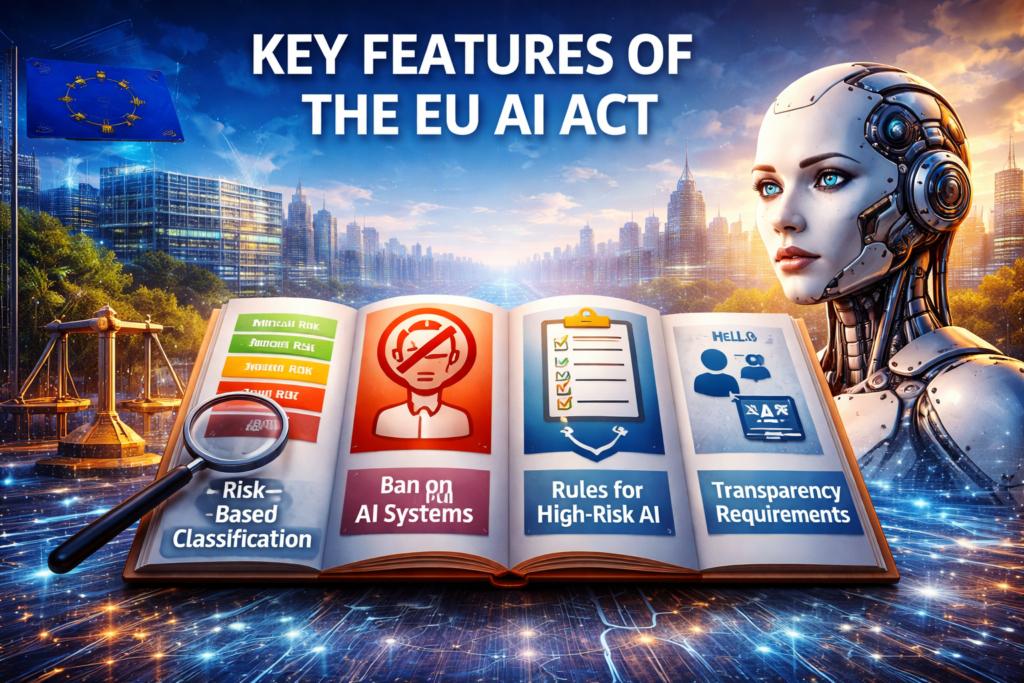
The law includes several important features that make it strong and effective.
1. Risk-Based Classification
AI systems are divided into four categories:
| Risk Level | Description |
| Unacceptable Risk | Completely banned AI systems |
| High Risk | Strict rules and compliance required |
| Limited Risk | Transparency obligations |
| Minimal Risk | No major restrictions |
Read More: Qwen3-Next-80B-A3B-Instruct / Skincare Tips AI Technology / AV4US
2. Ban on Harmful AI Systems
Some AI uses are completely banned, such as:
- Social scoring systems
- Real-time biometric surveillance (in some cases)
- Manipulative AI systems
These are considered dangerous for society.
3. Strict Rules for High-Risk AI
High-risk AI systems must follow strict guidelines, including:
- Data quality checks
- Human oversight
- Risk assessment
- Proper documentation
Examples include:
- AI in healthcare
- AI in hiring systems
- AI in law enforcement
4. Transparency Requirements
Certain AI systems must clearly inform users that they are interacting with AI. For example:
- Chatbots
- Deepfake content
This helps build trust among users.
EU AI Act Timeline
Understanding the timeline is very important. Recent updates in EU AI Act news highlight a phased implementation.
| Year | Key Event |
| 2024 | Law officially adopted |
| 2025 | Ban on certain AI systems begins |
| 2026 | High-risk AI rules start applying |
| 2027 | Full implementation |
This gradual approach gives companies time to prepare.
Impact on Businesses
The EU AI Act will have a major impact on companies that use AI.
1. Compliance Requirements
Businesses must:
- Check if their AI systems are high-risk
- Follow documentation rules
- Ensure transparency
Failure to comply can result in heavy fines.
2. Increased Costs
Companies may need to invest in:
- Legal support
- Technical upgrades
- Risk management systems
This can increase operational costs, especially for smaller businesses.
3. Better Trust and Reputation
On the positive side:
- Users will trust compliant companies more
- Businesses can build a strong reputation
This is a key highlight in many EU AI Act news reports.
Impact on Startups
Startups may face both challenges and opportunities.
Challenges
- Limited resources for compliance
- Complex legal requirements
Opportunities
- Clear rules create a level playing field
- Trustworthy AI products can attract investors
Many experts in EU AI Act news believe startups that adapt early will benefit the most.
Impact on AI Development
The EU AI Act will shape how AI is developed in the future.
1. Focus on Responsible AI
Developers must ensure:
- Fairness
- Accuracy
- Safety
2. Better Data Practices
Data used in AI must be:
- High quality
- Free from bias
3. Innovation with Responsibility
The law encourages innovation but with clear limits. This balance is often discussed in recent EU AI Act news updates.
Challenges in Implementation

Even though the law is strong, there are some challenges.
1. Complexity of Rules
Understanding and applying the law can be difficult.
2. Global Impact
Companies outside the EU must also follow these rules if they serve EU users.
3. Rapid AI Growth
Technology is evolving quickly, making regulation harder.
Opportunities Created by the EU AI Act
Despite challenges, the law brings many benefits.
1. Safer AI Systems
Users can trust AI more.
2. Global Standard
Other countries may follow similar rules.
3. Ethical Innovation
Companies will focus on building responsible AI.
This positive outlook is frequently seen in EU AI Act news discussions.
Read More: OpenFuture World / Agriculture Technology News Today / Deep Learning
How Businesses Can Prepare
Companies should start preparing early.
Steps to Follow
- Identify AI systems in use
- Classify risk levels
- Implement compliance measures
- Train employees
- Monitor updates regularly
Being proactive can reduce risks and costs.
Future Outlook
The EU AI Act is just the beginning. As AI continues to grow, more updates and changes are expected.
Future EU AI Act news may include:
- New guidelines
- Additional restrictions
- Global cooperation
This law will likely influence AI regulations worldwide.
Conclusion
The European Union’s new AI Act is a landmark proposed regulation for artificial intelligence. It sets out clear rules, safeguards users and fosters responsible innovation.”
Recent news around the EU AI Act reflects its increasing significance for businesses, developers and governments. It brings challenges to face, but opportunities for those who are willing to adapt.
Anyone who works within AI needs to understand this law. Simply following the rules and preparing in advance will not only help companies avoid risks, but also create conditions for building trust and achieving long-term success.
FAQs About EU AI Act News
1. What is the main purpose of the EU AI Act?
Answer: The main purpose is to ensure AI systems are safe, transparent, and respect human rights.
2. When will the EU AI Act fully apply?
Answer: Full implementation is expected by 2027.
3. Who needs to follow this law?
Answer: Any company that provides AI services in the EU must follow it.
4. What are high-risk AI systems?
Answer: These are systems that can impact safety or rights, such as healthcare or hiring AI.
5. Why is the EU AI Act important?
Answer: It sets global standards for responsible AI use and protects users from harmful technologies.
For regular update’s about the AI, AI Tools, AI Guide, Technology & More. Visit, The TechUnfoldedAi.com.
Leave a Reply